*
The RoHS icon on this product indicates that the PCBs, components, solder, and chemicals are all lead-free and RoHS compliant. Additionally, this product is produced using a lead-free process. Unfortunately, we are currently unable to provide documentation confirming that this product is RoHS compliant.
Resources:
*If your browser cannot display the PDF file properly, please save it to your computer and open it with a PDF reader.
Package Includes:
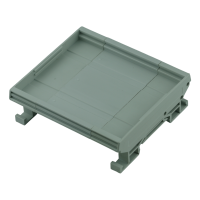
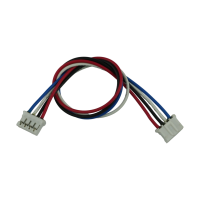
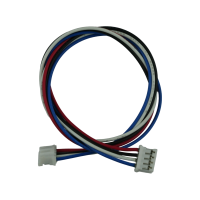
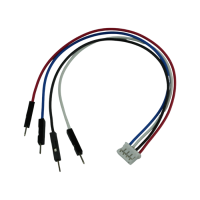
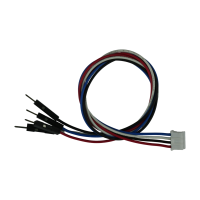
 This package does not include DIN-Rail PCB holder and cables.
Notes:
This package does not include DIN-Rail PCB holder and cables.
Notes:
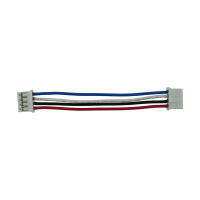
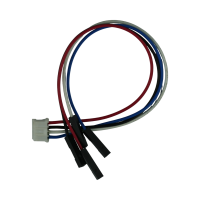
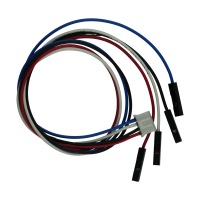
- This board uses 4-pin, 2.00mm pin pitch connectors for I2C bus.
Features:
- 4 relays on board
- 4 opto-coupler inputs
- Interrupt(INT) output signal
- Based on PCA9554C
- 400kHz I2C bus frequency
- Addressable via 3 jumpers, supporting up to 8 boards
- Configurable SCL/SDA pull-up resistors
- Operating voltage: 3.0V-5.5V with reverse polarity protection
- Coil voltage: 9V-13V with reverse polarity protection (12V recommended)
- Relay contact rating: 10A @120VAC/24VDC or NO/NC:10A/6A @250VAC rated for 100,000 life cycles
- Prevent relays turning-on during power-up
- Compatible with Arduino, ESP32, Raspberry PI and STM32
- Mountable on DIN-Rail PCB holder
- PCB size: 87.50 x 72.00 mm
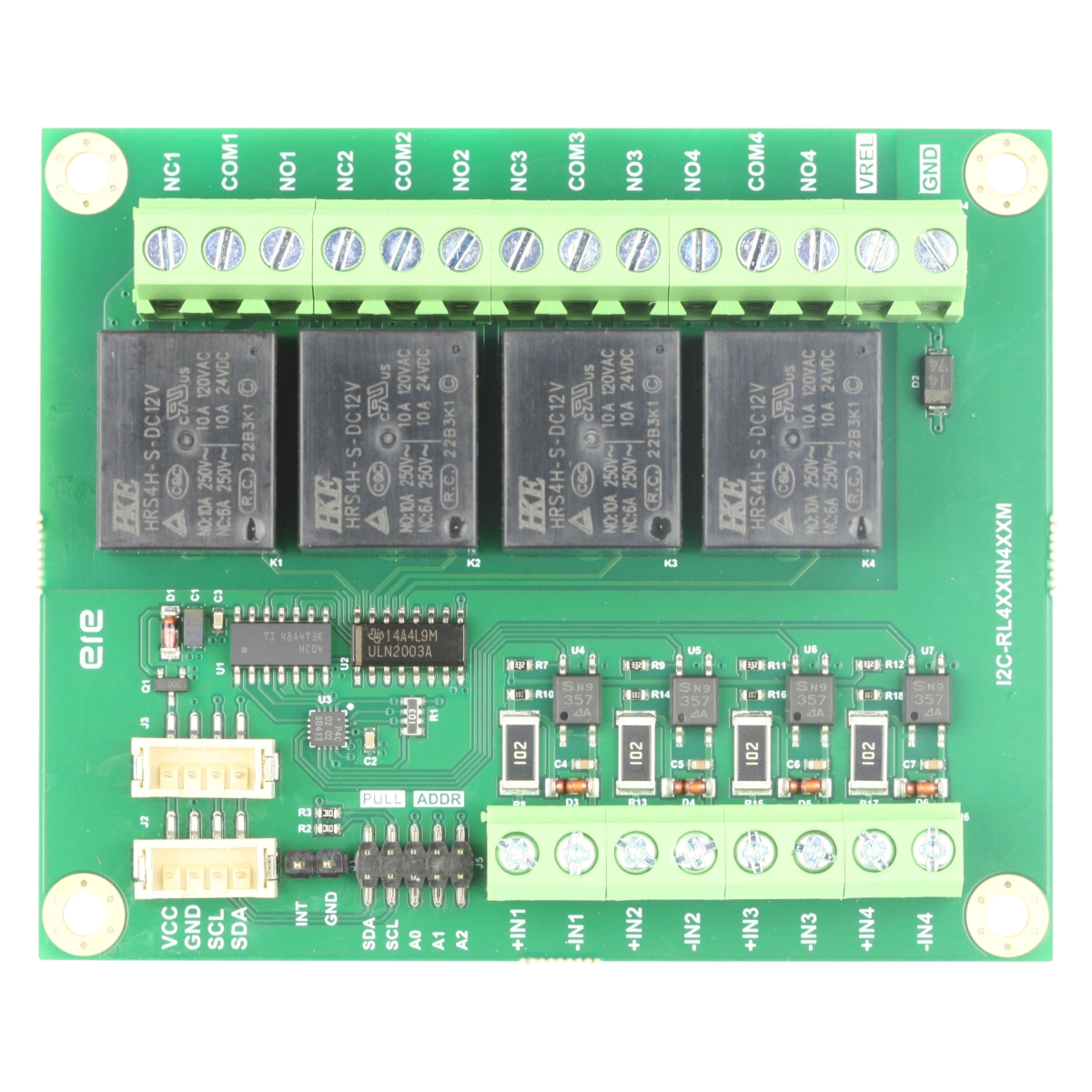
The I2C-RL412IN405CM is an I2C board with 4 relays and 4 opto-coupler input ports. The board is designed as a remote I2C bus expander based on the PCA9554C. It can be used with Arduino, ESP32, Raspberry Pi, and STM32.
The board supports an I2C bus frequency of up to 400 kHz.
The I2C address is configured using 3 jumpers, allowing up to 8 boards on the same bus. Additionally, up to 16 boards can be connected when both PCA9554B and PCA9554C versions are used together.
The operating voltage is 3.0V–5.5V, with reverse-polarity protection.
The opto-coupler input ports accept 5-30VDC for HIGH logic.
The relay coil voltage is 9V–13V, with reverse-polarity protection; however, 12V is recommended. The relay contact rating is 10A @120VAC/24VDC or NC/NO: 10A/6A @250VAC, and the relays are rated for 100,000 cycles.
The board prevents all relays from turning on during the initial power-up.
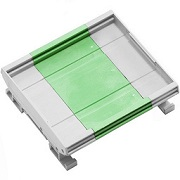
The board can be mounted on DIN-Rail PCB holder
Important: To prevent damage to the board, do not plug or unplug I2C cables while the power supply is turning on. Always turn off the power supply before connecting or disconnecting I2C cables.